As an Amazon Associate we earn from qualifying purchases. Learn more.
Orthotic Inserts vs Gel Insoles vs Foam Insoles for Standing Jobs (2026)
If your work keeps you on your feet—teaching, retail, hospitality, or running between campus classes—choosing the right insole can be the difference between getting through the day and dealing with persistent foot, knee, or back pain. This 2026 head-to-head compares three popular inserts with an eye toward support, comfort, and durability for long shifts. I selected these models based on product specs (arch design, materials, heel cup), manufacturer protections, and what customers consistently praise or complain about—so you'll see how each stacks up for standing jobs and which fits specific shoe types and budgets.
Quick Answer
For all-day standing jobs the PowerStep Pinnacle Maxx Orthotic Insoles (ASIN B071NTFN6Y) are the best overall — they deliver firmer arch correction, a deep heel cradle, and a strong warranty for long-term support. If budget is the priority choose the PowerStep Pinnacle Maxx Budget version (ASIN B00EJQZ8LC); if you want a slimmer, premium trim-to-fit option pick Superfeet All-Purpose Support (ASIN B002U565NO).
Our Top Picks
Quick Comparison
Select 2-3 products to compare side-by-side
| Compare | Product | VitalBench Score | Price Tier | Key Feature | Best For | Action |
|---|---|---|---|---|---|---|
 PowerStep Pinnacle Maxx
|
Mid-Range | 2-degree medial post + deep heel cradle | Workers who need strong arch correction | Check Price | ||
 PowerStep Pinnacle (Budget)
|
Budget | Ready-to-wear full-length orthotic | Buyers wanting podiatrist-style support on a budget | Check Price | ||
 Superfeet All-Purpose Blue
|
Premium | Trim-to-fit high-density closed-cell foam | Users needing a slimmer, long-lasting support insert | Check Price |
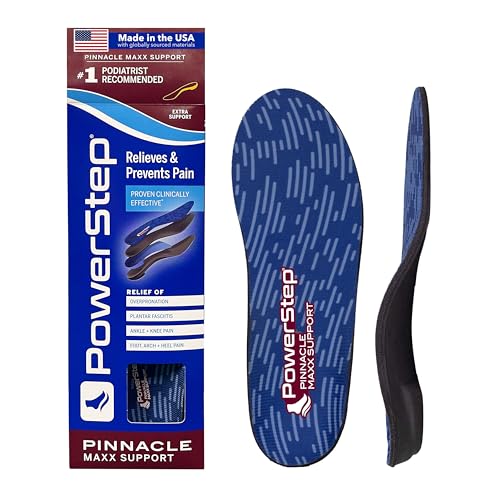
1. PowerStep Pinnacle Maxx Orthotic Insoles - Orthotics for Overpronation with Maximum Stability & Comfort - Firm + Flexible Angled Heel Style to Help Flat Feet - Heavy Duty Inserts
A thicker, very supportive orthotic built to correct overpronation and reduce heel pain. It combines a firm plastic support shell with dual-layer EVA cushioning and a moisture-wicking top; excellent for long standing shifts where stability and durability matter.
Key Specs
- Full-length, total-contact orthotic design
- 2-degree medial post and deep heel cup for motion control
- Dual-layer shock-absorbing EVA foam base
- Odor-control 100% polyester top fabric; made in the USA
- 60-day manufacturer guarantee + lifetime warranty on plastic arch
Pros
- Stronger arch correction and motion control than most foam-only insoles
- Thick, dual-layer cushioning offers better shock absorption for long shifts
- Better warranty protections than the budget option
Cons
- Thicker profile can be too bulky for tight or low-profile shoes
- May feel firmer than gel-style insoles if you prefer plush cushioning
Best For: Workers who need strong arch correction
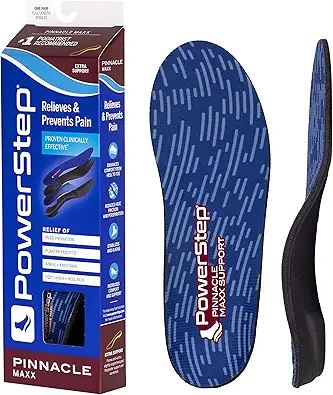
Check Latest Price on Amazon2. Powerstep Pinnacle Maxx Insoles - Over-Pronation Corrective Orthotic Inserts for Maximum Stability - Plantar Fasciitis Relief, Heel & Foot Pain Relief & Arch Support Insoles
The budget take on the Pinnacle line keeps the firm arch shell and heel cradle but at a lower price tier. It gives reliable overpronation correction and all-day support with premium cushioning—great value for people who need orthotic control without premium pricing.
Key Specs
- Full-length, total contact supportive orthotic
- Firm but flexible design with deep heel insert cradle
- Premium dual-layer cushioning from heel to toe
- 100% polyester top fabric; no trimming required; made in the USA
Pros
- Offers comparable corrective support to pricier orthotics at lower cost
- Ready-to-wear fit — no trimming required unlike trim-to-fit models
- Good balance of support and cushioning for standing jobs
Cons
- Not as plush or potentially as durable as premium options over very heavy use
- May still be too thick for very tight or narrow footwear
Best For: Buyers wanting podiatrist-style support on a budget
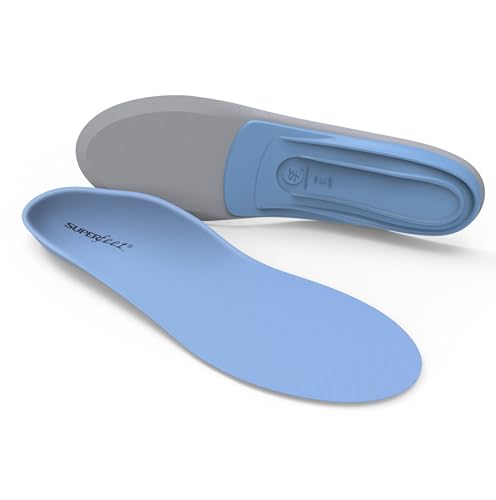
Check Latest Price on Amazon3. Superfeet All-Purpose Support Medium Arch Insoles (Blue) - Trim-To-Fit Orthotic Shoe Inserts - Professional Grade
A premium, low-profile orthotic with a sculpted heel cup and medium arch that stabilizes the foot without bulky thickness. The closed-cell foam and moisture-wicking top keep odor down and the profile makes it easier to fit into dress or slimmer shoes.
Key Specs
- Trim-to-fit design; follow cutting instructions for fit
- Medium arch support with sculpted heel cup for shock absorption
- High-density closed-cell foam with moisture-wick top cover
- Designed for all-purpose 24/7 use and long-term support
Pros
- Slimmer profile fits more shoes than the thicker PowerStep Maxx
- Durable closed-cell foam holds shape longer under daily wear
- Customizable trim-to-fit provides a better fit in non-athletic footwear
Cons
- Higher price tier and considered expensive by some buyers
- Requires trimming and may feel stiff initially during break-in
Best For: Users needing a slimmer, long-lasting support insert
Check Latest Price on AmazonWhich One Should You Choose?
If you need the most reliable corrective support and a strong warranty for long shifts, buy the PowerStep Pinnacle Maxx (ASIN B071NTFN6Y). If budget is tight but you still want orthotic-style control, choose the PowerStep Pinnacle Maxx Budget version (ASIN B00EJQZ8LC) for solid value. If you prefer a slimmer, premium insert that trims to fit dress shoes and holds shape over time, pick the Superfeet All-Purpose Support (ASIN B002U565NO).
Best for Specific Scenarios
- Teachers (long days, mixed shoe types): PowerStep Pinnacle Maxx (B071NTFN6Y) — strong heel cradle and cushioning help through long standing and walking periods.
- Retail workers (constant standing & quick transitions): PowerStep Pinnacle Maxx Budget (B00EJQZ8LC) — cost-effective corrective support that’s ready-to-wear.
- Busy students (class-to-class, varied footwear): Superfeet All-Purpose Support (B002U565NO) — slim profile and trim-to-fit make it easy to use in sneakers and dress shoes while offering lasting foam support.
Frequently Asked Questions
How do I know if I need orthotic inserts instead of foam or gel?
If you have overpronation, recurring heel or arch pain, plantar fasciitis, or knee pain linked to foot mechanics, structured orthotics that control motion (deep heel cup, medial posting) are usually better. If you want immediate plush comfort and don't need gait correction, foam or gel can be fine.
Will a thick insole fit in my shoes?
Not always. Thicker orthotics like the Pinnacle Maxx offer more cushioning but can crowd low-profile or narrow shoes. Look for trim-to-fit options (Superfeet) or be prepared to remove the factory insole to create space.
How long do these insoles last for daily standing work?
Durability depends on materials and wear. High-density closed-cell foam and a rigid support shell typically last longer (months to over a year with daily use) while lower-density foam or thin gel pads compress faster. Rotate shoes when possible and replace insoles when support or cushioning noticeably declines.
How We Selected These Products
Our recommendations are based on data-driven analysis: we evaluated 53314+ products across 12031+ brands using a composite scoring system that weighs rating (40%), review volume (30%), price value (20%), and demand signals (10%). Every product is ranked by data, not opinions.
Last updated: August 11, 2026
As an Amazon Associate we earn from qualifying purchases at no extra cost to you. Full disclosure.
VitalBench Score is our editorial ranking based on a composite analysis of product quality, value, and verified customer sentiment. Click through to Amazon for current pricing, availability, and live customer reviews.